

This month’s digest is a little different. Instead of a list of everything I published, I want to share the signals I’m following, what I explored in longer form, what I’ve been building behind the scenes - and what’s coming next.
AI is becoming a workspace, not just a tool. We’re delegating more, but still figuring out when and how humans should stay involved. Context is becoming part of the infrastructure. And the more human AI starts to feel, the more interesting - and sometimes uncomfortable - that relationship becomes.
These observations also started shaping what the Lab itself is becoming.
Signals from the wild
A few observations kept coming back in different forms this month.
AI is becoming a workspace
More and more of my work has moved from different tools into AI, especially the early stages: research, brainstorming, exploring ideas, shaping thoughts.
And that created a problem I didn’t expect: finding things again.
It also made me curious about what happens while AI is doing the work. When you launch a longer task in ChatGPT Work, Claude Cowork, or another AI, do you wait? Or immediately move to another task, idea, or chat?
The workflow around AI is changing along with AI itself.
What does the human do when AI does more?
One thought I keep coming back to:
Your main task as a human-in-the-loop is to challenge your AI.
Which sounds simple until the AI agrees with everything you say.
I caught myself enjoying exactly that recently. It’s very pleasing when an intelligence agrees with everything you say to it. Even if it’s artificial.
Not always a great outcome from the conversation, though.
A useful reminder to myself:
I’m trying to get some work done, not get approval. :)
This also led me to another question: perhaps AI products need a metric beyond whether the output was good.
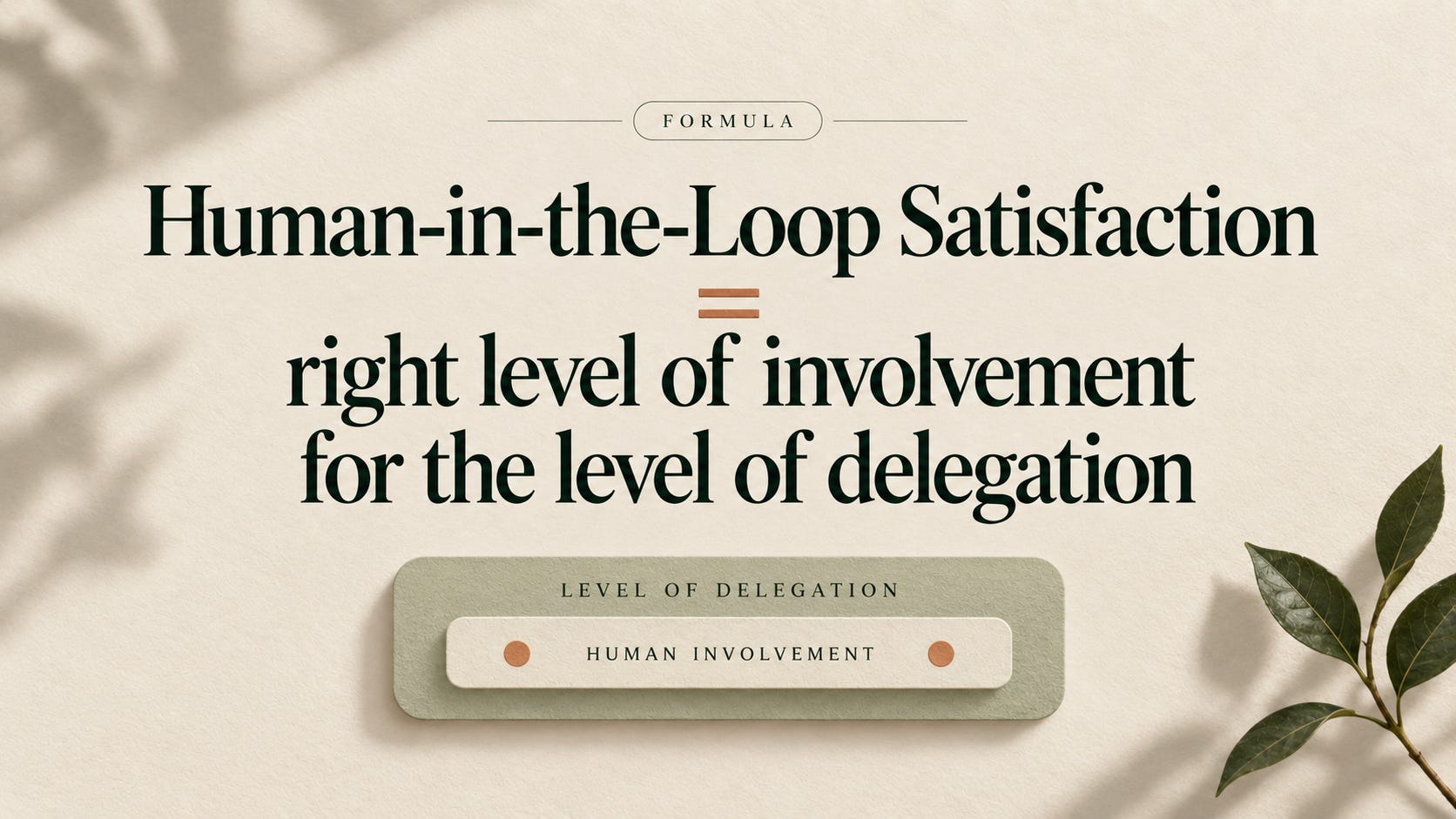
Human-in-the-Loop Satisfaction: at this level of delegation, did the product involve the human the right amount?
Context is becoming infrastructure
Another small formula from this month:
AI agent skill = capability + context.
The capability may increasingly become available to everyone.
The context surrounding it might be where a lot of the difference comes from.
And AI is becoming increasingly human
Personification × personalization creates an interesting combination: persuasion that feels like advice.
We’ve had personalized recommendations and advertising for years. But there’s something different about receiving them from something that talks to you, knows your context and increasingly behaves like a person.
I think we’re only beginning to understand what that changes.
Two ideas I explored further
Some Signals stay small. Others keep growing until they need more space.
Two of them became longer pieces this month.
The Tsunami of AI Adoption

“When I returned to the village, I couldn’t recognize a single thing. ... Everything was different.”
For the past few years, companies have been racing to adopt AI.
But while products were changing, users were changing too.
They started using ChatGPT, Claude and other AI tools every day. They learned what they could delegate. They developed expectations about speed, effort, context and control.
The question I explore in this article is what happens when we focus so much on adopting AI that we overlook the people adapting to it.
Read: The Tsunami of AI Adoption
The €8 Lesson About Human in the Loop

Today I got a parking ticket because of a very ordinary chain of events.
If we delegate more work to AI, the next question becomes:
where should the human stay involved?
I collected eight lessons about Human-in-the-Loop design — from delegation and criticality to checkpoints, control and what happens when we involve the human too much or too little.
Read: 8 Lessons About Human-in-the-Loop
Building the Lab
Something else started this month: I began documenting the Lab itself.
Building the Lab is a new series where I share the decisions, experiments and questions behind turning what I’ve been learning about AI adaptation into an actual product.
The first videos is already there.
I talk about why I started the AI Adaptation Lab in the first place.
I don’t automatically subscribe everyone in the Lab to this series. So if you’re interested in the behind-the-scenes process of building it, you can subscribe to Building the Lab here
Next in the Lab: the Framework goes into practice
Until now, much of the Lab has been about observing the change.
This month, we start putting the Framework into practice.
I’ll begin publishing the first sections of the AI Adaptation Framework, together with practical tools you can use on your own product.
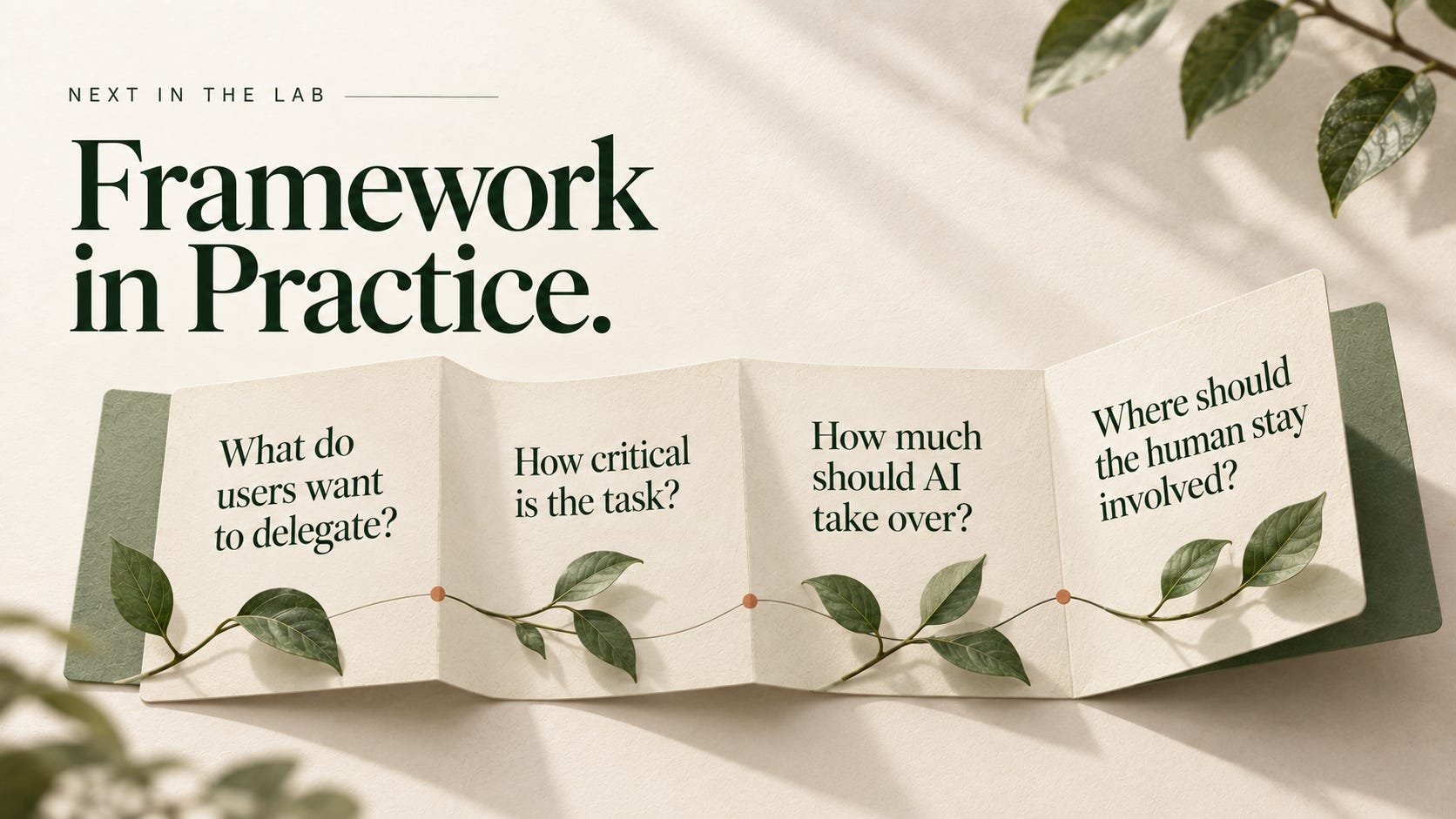
We’ll start working through questions like:
What do users actually want to delegate?
How critical are those tasks?
How much should AI take over?
Where should the human remain involved?
And how do we know whether that balance actually feels right?
This part of the Lab is primarily for Product Managers, startup founders, innovation leaders and CTOs who are currently adopting AI - or have already shipped AI into their products and are now trying to figure out what actually works for their users.
And this is only the beginning. As the Framework moves into practice, I’ll keep sharing what I learn, what changes, and what survives testing.
Early access is open
If you know someone who is currently trying to figure out what AI should actually do inside their product - not simply how to add more AI - feel free to send them the Lab.
Early access is free
And if that person is you, I’d love to hear one thing:
What is the hardest part of AI adoption in your product right now?
Reply to this email or leave a comment. It may become one of the questions we explore together in the Lab.
Adapt, not optimise.